
Artists and athletes lawyers
Create, compete, we secure the rest.
INFLUXIO, an independent law firm in Paris and Brussels, defends artists, athletes and esports players at every stage of their careers: contracts, copyright and neighbouring rights, image, sponsorship and online reputation. On stage or on the field, your name is also a brand, and we protect it.




Tell us about your situation
Response within 24 hours
What is the role of an Artists and athletes lawyer?
An artists and athletes lawyer negotiates performer contracts (Article L.212-3 IP Code) and professional athletes' contracts (Article L222-2 French Sports Code), secures fees, royalty accounting and neighbouring rights, and protects image, name and sponsorship deals. Consult one before signing with a producer, label, club or brand.
Our services
How we can help you.
Practical examples
Defense of a street artist against unauthorized exploitation
A clothing brand had reproduced a mural on its t-shirts without authorization. Rights ownership was proved despite the ephemeral nature of the work and €30,000 in damages obtained.
Public commission contract negotiation for a sculptor
A sculptor received a commission from a local authority but the contract provided for total rights assignment. The terms were renegotiated to preserve the artist's moral right and resale right.
Client reviews
4.9/5 on GoogleWhat our clients say about us.
“Great responsiveness from all team members, with solutions found quickly and efficiently.”
Christ C.
“We entrusted INFLUXIO with a complex case. Their technical expertise, strategic vision and the quality of their legal briefs were decisive.”
Mia-Line C.
“We particularly appreciated the firm's professionalism, responsiveness and ability to defend our interests with conviction, while remaining measured and factual.”
The News A.
“I contacted this firm when launching my influencer marketing agency. Very satisfied with the quality of the work, the responsiveness and the quality of the exchanges.”
Alex E.
Let's talk about your situation,
within a few hours.
Book a consultationInsights
Learn more about this area.
What does an artists and athletes lawyer do?
An artists and athletes lawyer protects creators, performers and athletes on the legal questions raised by creating works, exploiting them and commercialising an image.
INFLUXIO, based in Paris and Brussels, advises on intellectual property law: defending your copyright, negotiating and monitoring contracts, and acting against infringements of your rights.
Whether in music, audiovisual, film, publishing, visual arts or live performance, we favour negotiation and bring court action when an amicable route no longer suffices.
We also act for athletes: their image, name and contracts raise questions very close to those of artists, with the additional rules of the French Sports Code set out on our sports law page.
Our legal services for artists and athletes.
Copyright protection.
Under French law, copyright arises from the mere creation of an original work, with no registration (Article L.111-1 IP Code). We build evidence of your creations (INPI e-Soleau envelope, bailiff's report), draft your rights assignments and act against any unauthorised use, whether you create music, films, paintings or digital works.
Litigation and conflict resolution.
In case of disputes related to your works or contracts, we handle the conflict and seek a resolution, amicably or through the courts. Our lawyers represent you in summary (urgent) proceedings and in proceedings on the merits.
Legal advice and artist representation.
Our lawyers draft, negotiate and review artistic contracts. We also act as artists' representatives in their dealings with producers, galleries and labels.
Contract drafting and negotiations.
We offer contract drafting services for all artistic activities. Whether collaborating with other artists, producers, or agents, we ensure your contracts are well structured to protect your rights.
Artists and athletes: one career, one image, one brand.
A singer and a boxer sign different contracts, but they share the same capital: a name, an image and an audience. Image and privacy rights (Article 9 of the French Civil Code) protect both against commercial use without consent. Sponsorship, ambassador and brand partnership agreements call for the same checks: term of use, territories, media, exclusivity and exit clause.
Our firm handles these questions for both groups, applying the rules specific to each field.
The professional athlete's contract.
A salaried professional athlete in France signs a specific fixed-term contract, in principle lasting between one sporting season and five years (Articles L222-2 to L222-2-8 of the French Sports Code). The club may also sign a separate agreement to exploit the athlete's image, name or voice, paid through a dedicated fee (Article L222-2-10-1). We review and negotiate both contracts and act in case of early termination or dispute.
Details are on our sports law page.
Agent, manager or lawyer acting as sports agent.
In France, a sports agent holding the required licence carries out the introduction activity governed by Article L222-7 of the French Sports Code. A lawyer may represent a party in concluding the contract under Article 6 ter of the Law of 31 December 1971, without carrying out that introduction activity.
Fees for that mandate are capped at 10% of the contract value (Article 10), including the combined remuneration where several lawyers or a lawyer and an agent intervene. The lawyer is paid only by their client and remains bound by professional secrecy and conflict-of-interest rules. For artists, artistic-agent activities fall under Articles L7121-9 et seq. of the French Labour Code.
Stage names, athletes' names and trademarks.
A stage name, nickname or signature celebration can be registered as a trademark with INPI or EUIPO for the goods and services actually used: clothing, content, drinks, games. The filing must come from the person concerned or have their consent. It opens an infringement action against unauthorised use, in addition to image rights.
Esports players, streamers and teams.
Some European countries already provide a dedicated esports player contract.
In France, for example, a salaried professional competitive video game player signs a specific fixed-term contract under Article 102 of the Law of 7 October 2016 for a Digital Republic, with Decree No. 2017-872 of 9 May 2017, which only an approved organisation may conclude; minors taking part in paid competitions are subject to their own authorisation rules.
We review these contracts, buyout and termination clauses when a player moves between teams, and the split of streaming revenue on Twitch or YouTube. Conflicts between team sponsors and a player's personal partners are best settled upfront, contract by contract, and every sponsored post must be clearly disclosed as advertising. A player's gamertag can be protected like an athlete's name.
Details are on our esports law page.
Online reputation, harassment and hacked accounts.
After a cancelled concert or a lost match, online attacks target artists and athletes alike.
We act against cyberbullying and defamation, request content removal from platforms and assist with the recovery of a hacked or suspended Instagram account. Our online reputation practice works directly with the partner who follows your career.
Legal statuses of artists in France.
French law provides several statuses for artists, each with a distinct social and tax regime.
The artist-author (artiste-auteur, writer, composer, visual artist, photographer, etc.) is covered by the general social security scheme under rules specific to artist-authors (Article L.382-1 of the French Social Security Code): contributions have been collected by URSSAF Limousin since 1 January 2019, and AGESSA and the Maison des Artistes merged into the Sécurité sociale des artistes auteurs, approved on 1 December 2022. The performing artist (artiste-interprète, actor, musician, dancer, etc.) benefits from a presumption of employment under Article L.7121-3 of the French Labour Code (Code du travail): the contract under which they perform for remuneration is presumed to be an employment contract, unless they carry out that activity in conditions requiring registration in the trade and companies register.
The intermittent du spectacle is a multi-employer salaried worker who benefits from a specific unemployment insurance scheme (Annexes VIII and X of the general unemployment insurance regulations), subject to proof of a minimum number of hours worked.
The micro-enterprise status remains possible for ancillary activities (workshops, training, merchandise sales), without setting aside the presumption of employment attached to performances.
Neighbouring rights and collective management.
Neighbouring rights (droits voisins du droit d'auteur), governed by Articles L.211-1 et seq. of the Intellectual Property Code, protect performing artists, phonogram and videogram producers, and audiovisual communication companies.
The performing artist has economic rights (to authorize or prohibit the fixation, reproduction, and communication to the public of their performance) and moral rights (respect for their name, quality, and interpretation). For performers, neighbouring rights are managed collectively mainly by ADAMI (Société civile pour l'Administration des Droits des Artistes et Musiciens Interprètes) for featured artists and by SPEDIDAM (Société de Perception et de Distribution des Droits des Artistes-Interprètes) for session musicians and non-featured performers; phonogram producers are represented by SCPP and SPPF. Authors' rights, which are distinct from neighbouring rights, are managed by SACEM (Société des Auteurs, Compositeurs et Éditeurs de Musique) for music and by SACD (Société des Auteurs et Compositeurs Dramatiques) for dramatic and audiovisual works.
Equitable remuneration (rémunération équitable, Article L.214-1 IP Code) pays performers and producers when commercial phonograms are played in public (radio, bars, shops). Private copying remuneration (Article L.311-1 IP Code) compensates for copies made for personal use. These organisations are governed by Articles L.321-1 et seq. of the IP Code and supervised by the Commission de contrôle des organismes de gestion des droits d'auteur et des droits voisins (Article L.327-1). We audit distribution statements, contest undue deductions and, where the artist wishes, limit the mandate granted for specific catalogues or territories.
Contracts, taxation and social protection of artists.
The professional practice of art relies on a specific legal ecosystem combining contract law, social law, tax law and copyright. Our firm advises visual artists, musicians, performers and creators on this entire framework, from status choice to artistic estate transmission.
The artist's fundamental contracts.
An artist signs many contracts during their career: artist contract (phonographic production, IP Code L.212-3), publishing contract (IP Code L.132-1), performance contract, commission contract, contract with a gallery or agent.
The applicable rules depend on the agreement and rights involved: assignments of authors' rights are governed notably by Articles L.131-1 to L.131-4 of the Intellectual Property Code; performers' written authorisation and remuneration are governed by Article L.212-3. For audiovisual productions, the contract signed with the producer constitutes authorisation under Article L.212-4 and must specify separate remuneration for each mode of exploitation.
The artist-authors' social security scheme.
Since 1 January 2019, URSSAF Limousin has collected artist-authors' contributions. The Sécurité sociale des artistes auteurs, created by the merger of AGESSA and the Maison des Artistes, handles the scheme's governance and welfare support.
Artist-authors (graphic and plastic arts, writers, composers, photographers, etc.) contribute to the general scheme and to IRCEC for supplementary pension, and are covered for health, maternity, disability and old age. Employed performers fall under the general social security scheme.
Access to the intermittent entertainment-worker unemployment scheme depends on the applicable eligibility conditions, notably Annex X for artists.
The resale right (droit de suite).
The resale right (IP Code L.122-8) grants the author of an original graphic or plastic work an inalienable right to receive a percentage on the price of any subsequent resale carried out by an art market professional.
The rate is degressive (4% to 0.25%) and capped at €12,500. This right subsists during the author's lifetime and 70 years after their death for the benefit of their heirs, and is generally collected by ADAGP.
Negotiating and securing artists' agreements.
An artist's career rests on three contracts: the recording agreement, the publishing agreement and the management or booking agreement.
Each is negotiated against the French Intellectual Property Code rules on moral rights (Article L.121-1, perpetual and inalienable), proportional remuneration (Article L.131-4) and the transparency and fair remuneration obligations of Directive (EU) 2019/790, transposed in France by Ordinance No. 2021-580 of 12 May 2021. Our firm advises emerging and established artists, producers, labels and managers at every stage: 360 deals, distribution, sync licensing, NFT releases and Web3 collaborations.
Recording, publishing and 360 deals.
An artist signs a recording agreement (performance services and authorisation to exploit their neighbouring rights), a publishing agreement (assignment of authors' rights) and, more and more often, a 360 deal that also covers touring, merchandising and image. Each one calls for its own checks: advance and recoupment, minimum guarantee, reversion clause, audit rights and territories.
We draft and renegotiate these agreements with an eye on long-term ownership of the recordings and the triggers for renegotiation.
Streaming royalties and transparency.
Directive (EU) 2019/790 requires labels and publishers to inform authors and performers at least once a year about the exploitation of their works and performances (Article 19). It also allows them to claim additional remuneration when the agreed remuneration turns out to be disproportionately low compared with the revenue generated (Article 20). We audit statements, recover unpaid royalties and renegotiate contracts that no longer reflect digital revenue.
The artist's image and merchandise.
An artist's image is a source of income in its own right. We structure merchandising, brand collaborations and likeness licences while respecting moral rights, including when exploitation runs through a dedicated company.
Useful glossary in performing-artist law.
- Presumption of salaried status
- French rule presuming a contract with a performer to be an employment contract (Articles L.7121-3 and L.7121-4 of the French Labour Code); artistic freedom alone does not rebut this presumption.
- Moral right
- perpetual, inalienable and imprescriptible prerogative of the author (Article L.121-1 CPI) on authorship and integrity of the work, enforceable even after assignment of economic rights.
- ADAMI / SPEDIDAM
- French collective management organisations for performers' neighbouring rights (recorded music, dubbing, capture), subject to the oversight provided by the French Intellectual Property Code.
Tailored support
Discuss your situation.
Receive a clear, personalized quote from our team.
FAQ
Frequently asked questions.
Yes. We advise athletes on sponsorship and image agreements, trademark registration of their name and online reputation. We also advise on the specific fixed-term employment contract for salaried professional athletes within Article L222-2 of the French Sports Code. Federation sanctions, CAS arbitration and the agent's role are covered on our sports law page.
Not exactly. In several European countries, including France, competitive gaming is not a recognised sport, and the salaried professional player falls under a dedicated contract signed with an approved organisation. The player's image, gamertag and partnerships, however, are protected with the same tools as those of an athlete or an artist. See our esports law page.
A sports agent holding the required licence may carry out the introduction activity governed by Article L222-7 of the French Sports Code. A lawyer may represent a party in concluding the contract under Article 6 ter of the Law of 31 December 1971. Fees for that mandate are capped at 10% of the contract value (Article 10), including the combined remuneration where several lawyers or a lawyer and an agent intervene.
The lawyer is paid only by their client and must comply with conflict-of-interest rules.
Yes, with no formality.
Under French law, performers hold neighbouring rights (Articles L.212-1 et seq. IP Code): their written authorisation is required to record, reproduce and communicate their performance to the public (Article L.212-3), and they hold a moral right to respect for their name, standing and performance (Article L.212-2). Economic rights last 50 years after the performance, and 70 years from publication when the performance is fixed on a published phonogram (Article L.211-4).
Three points come up often. Selling the work does not transfer the copyright: the buyer owns the object, not the right to reproduce it (Article L.111-3 French IP Code). Distance sales to consumers in the EU generally carry a 14-day withdrawal right (Article L.221-18 of the French Consumer Code), except for works made to the buyer's specifications.
Images published online also expose the work to copying: we organise evidence of your intellectual property and takedown requests to platforms.
Under French law, a work created together is in principle a work of joint authorship: it belongs jointly to its co-authors, who must exercise their rights by common agreement, and each may exploit their own contribution separately if it belongs to a different genre, without harming the joint exploitation (Articles L.113-2 and L.113-3 IP Code). A written agreement should settle from the outset the split of rights and income, credits and how decisions are made in case of disagreement.
A gallery agreement does not transfer any copyright by itself. Under French law, each right assigned must be mentioned separately, with a scope limited in extent, purpose, place and duration (Article L.131-3 IP Code). We define the permitted uses (catalogue, website, social media, press), their duration and the remuneration, proportional in principle (Article L.131-4).
An original digital creation (illustration, video, music, software) is protected by copyright from the moment it is created (Article L.111-1 French IP Code). The challenge is evidence: an INPI e-Soleau envelope, timestamping or a bailiff's report. If your work is copied, we send takedown requests to platforms and bring an infringement action.
They defend the interests of creators, performers and athletes. They negotiate and draft their contracts (label, producer, gallery, club, sponsor), protect their copyright and image, and act in case of dispute, infringement or damage to their reputation.
Plagiarism is not a legal concept: unauthorised reproduction of a work is infringement (Articles L.335-2 and L.335-3 French IP Code), punishable in France by 3 years' imprisonment and a €300,000 fine.
We gather evidence of prior creation, have the copy formally recorded, send a formal notice and, where needed, carry out an infringement seizure and bring a civil infringement action before a specialised court (Article L.331-1 IP Code).
A work lent for an exhibition is in principle held on deposit: under French law, the gallery must return it as soon as you ask, even if a term was agreed (Article 1944 of the Civil Code). We send a formal notice listing the works, then apply for summary proceedings to obtain their return under a daily penalty.
If the gallery enters insolvency proceedings, the claim for return must be filed within 3 months of publication of the opening judgment (Article L.624-9 of the French Commercial Code).
Related publications
Our latest publications and media appearances.
In short
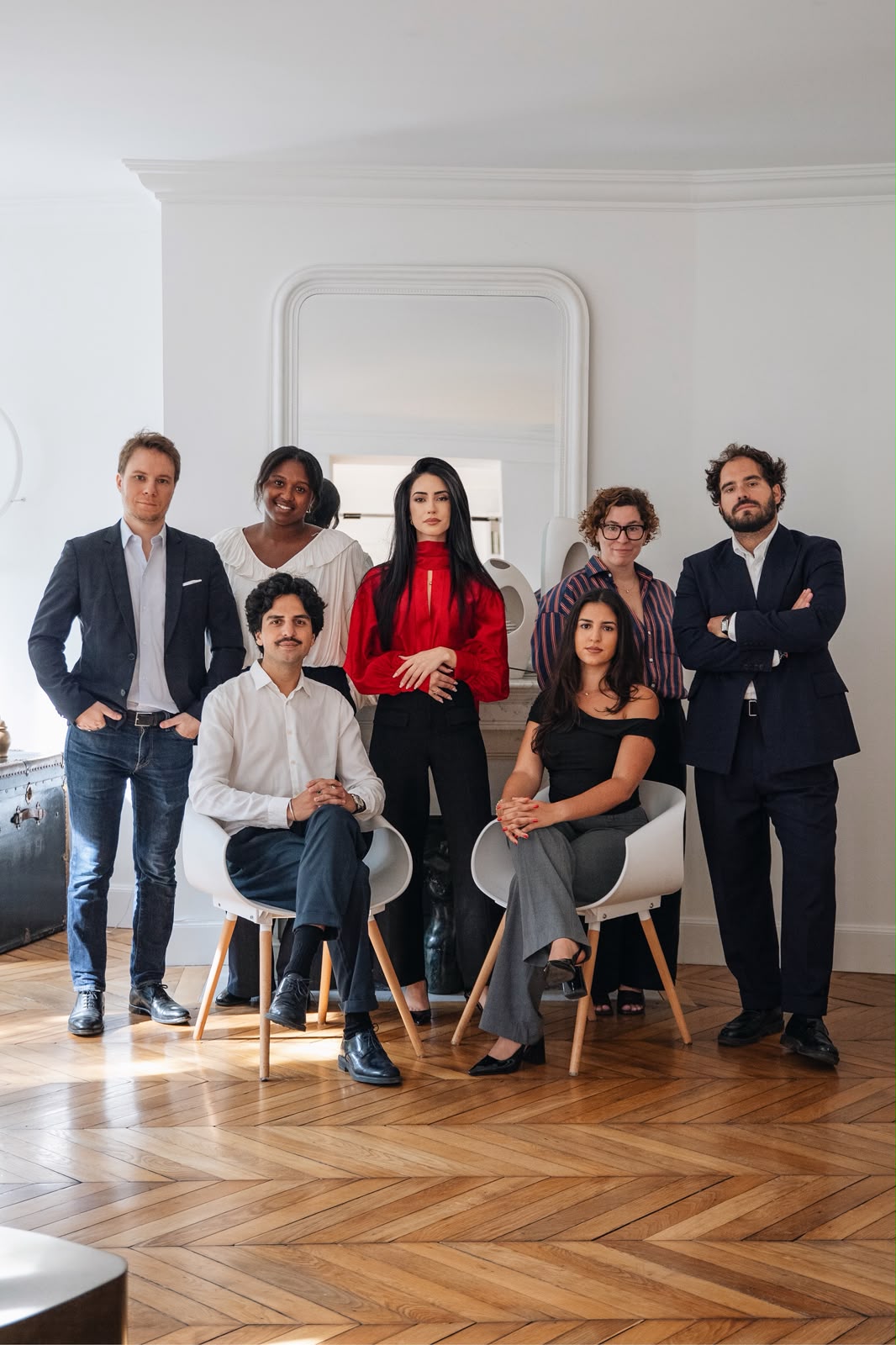
INFLUXIO is a law firm specialized in artists and athletes, based in Paris and Brussels. Contracts, neighbouring rights, image, sponsorship, trademarks and online reputation, Paris and Brussels. More than 800 clients have already trusted INFLUXIO.
Response within 24 hours.

Written and reviewed by
Partner · Head of Artists & athletes
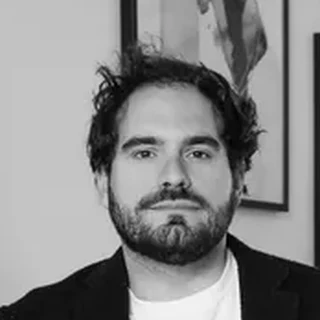
Admitted to the Paris and Brussels Bars and co-founding partner of INFLUXIO, Maître Alexandre BIGOT-JOLY trained in media law, intellectual property and criminal law. Recognised as one of the leading figures in French music law, he advises independent labels and majors, publishers, producers, managers and recording artists, has spent more than a decade working with content creators, influencer agencies and advertisers, and advises athletes, clubs and brands on sports law. He lectures on music and communications law at CELSA, ISCOM and ESP.
View full profile →Updated on