
Audiovisual law attorney
Legal excellence at the service of the screen.
Our specialized law firm assists YouTubers and audiovisual production companies on the Internet and social media. INFLUXIO, a firm specializing in audiovisual law in Paris and Brussels, member of the Audiovisual and Media Club, supports you in advisory and litigation, particularly in drafting and reviewing all your contracts.




Tell us about your situation
Response within 24 hours
What is the role of an Audiovisual law attorney ?
An audiovisual lawyer drafts production, co-production and distribution contracts (Article L.132-24 IP Code), secures exploitation on linear channels and VoD platforms and represents producers and broadcasters before ARCOM and the civil court. Consult one before shooting, when negotiating with a broadcaster or in exploitation-rights disputes.
Our services
How we can help you.
Practical examples
Negotiation of an international co-production contract
A French production company wanted to co-produce a documentary series with a British partner. The co-production contract, territorial rights distribution, and SVOD platform broadcasting conditions were negotiated.
Image rights dispute in a reality TV show
A reality TV participant contested the use of their image in reruns and compilations not covered by the contract. €25,000 in compensation was obtained and cessation of the disputed broadcasts secured.
Client reviews
4.9/5 on GoogleWhat our clients say about us.
“Great responsiveness from all team members, with solutions found quickly and efficiently.”
Christ C.
“We entrusted INFLUXIO with a complex case. Their technical expertise, strategic vision and the quality of their legal briefs were decisive.”
Mia-Line C.
“We particularly appreciated the firm's professionalism, responsiveness and ability to defend our interests with conviction, while remaining measured and factual.”
Les Nouvelles A.
“I contacted this firm when launching my influencer marketing agency. Very satisfied with the quality of the work, the responsiveness and the quality of the exchanges.”
Alex E.
Let's talk about your situation,
within 24 hours.
Book a consultationInsights
Learn more about this area.
What is an audiovisual law attorney ?
Audiovisual law governs film production, series, digital formats and streaming.
It combines copyright (Articles L.113-7 and L.132-23 of the French IP Code), neighboring rights, production and co-production contracts, funding obligations for creation (SMAD Decree of 22 June 2021) and regulation by ARCOM. Our firm secures every link of the chain, from development to exploitation, in connection with performers' rights, and conducts court action in any production or distribution dispute.
Audiovisual challenges.
Protection of your intellectual property rights (copyright, design rights). Protection of your data and privacy. Compliance with constantly evolving regulations (ARCOM, Law of September 30, 1986 known as the Léotard Law, CNC, AVMS Directive).
Who is concerned ?
- Consumers.
- Public figures.
- Businesses.
- Brands.
- Professionals, especially YouTubers, influencers, and other videographers.
The omnipresence of audiovisual.
Audiovisual encompasses a wide range of media. It is a field in constant legal evolution. Today, audiovisual generates significant litigation.
What is concerned ?
- Streaming and audio platforms.
- Television.
- Websites & Video games.
- Social media (YouTube, Instagram, TikTok).
- Cinema.
In what cases can we help you ?
The diversity of media implies a diversity of complex contracts. It is therefore necessary to call upon a qualified and experienced attorney to protect, advise, and/or defend you. Our role is to protect and advise you on audiovisual matters (proceedings, contracts).
Media.
- Broadcasting license contract.
- Advertising sponsorship contract.
- Audiovisual production contract.
Internet.
- Terms and conditions contract.
- Online advertising contract.
- Service provision contract.
Streaming platform.
- Content license contract.
- Distribution contract.
- Brand license contract.
Social media.
- Usage license contract.
- Advertising contract.
- Partnership contract.
Audio streaming platform.
- Artist contract.
- Music license contract.
- Podcast partnership contract.
Cinema.
- Copyright contract.
- Actor contract.
- Distribution contract.
Video games.
- Video game development contract.
- Video game exploitation contract.
- Video game distribution contract.
How can our firm help you ?
Our firm specializing in audiovisual law protects your rights and, where needed, restores them.
Legal advice.
Our attorneys can advise you in contract law, business law, employment law, intellectual property, and sector-specific regulation.
We also advise YouTubers and other videographers on copyrights, monetization, and image rights, and regulatory compliance to ensure the protection and success of their content.
Protection of your rights.
Our attorneys advise you on how to protect your rights, particularly intellectual property rights. We anticipate legislative and technological developments, ensuring intellectual property strategies stay current and aligned with creators' and distributors' long-term objectives.
Problem identification and resolution.
Our attorneys help you identify problems and develop strategies to resolve them. In case of disputes, our attorneys can represent you before the courts to ensure your defense.
Contract drafting and negotiation.
Our attorneys can draft contracts and agreements to protect your interests and reputation. They can also review and negotiate contracts on your behalf.
Regulatory compliance.
Our attorneys can help you comply with national and international regulations governing the audiovisual sector.
The Regulatory Framework of Audiovisual in France and Europe.
The audiovisual sector is governed by a dense regulatory corpus. The Law of September 30, 1986 on Freedom of Communication (known as the loi Léotard), amended numerous times, constitutes the founding text of French audiovisual law. It governs broadcasting conditions, service editor obligations, and sector regulation.
At the European level, the Audiovisual Media Services Directive (AVMSD 2018/1808) of November 14, 2018 strengthened obligations for video-sharing platforms and extended the scope of regulation to on-demand services.
ARCOM (Autorité de régulation de la communication audiovisuelle et numérique), created in 2022 from the merger of the CSA and Hadopi, now exercises broadened regulatory power covering television, radio, online platforms, and anti-piracy efforts. The CNC (Centre national du cinéma et de l'image animée) provides economic support for production and regulates the film and audiovisual market.
Decree No. 2021-793 of June 22, 2021 on audiovisual media services on demand (the SMAD decree) imposes on SVOD platforms (Netflix, Disney+, Amazon Prime Video, etc.) obligations to fund French and European audiovisual creation (between 20% and 25% of their revenue generated in France), as well as quotas for featuring European works in their catalogs (minimum 30%, the European floor), increased to 60% European works and 40% originally French-language works under domestic law (art. 27 of the SMAD decree).
Funding, media chronology and SMAD obligations.
The French audiovisual sector is one of the most regulated in the world, with a funding and obligations system that flows through the entire production chain. Our firm advises producers, platforms and creators on all of these mechanisms.
Funding of creation.
The CNC, a public establishment, finances creation through the support account fed notably by the TSA (cinema ticket tax), TST (television service tax) and TSV (videograms). Service publishers and on-demand audiovisual media services platforms are subject to investment obligations in European and original French-language works (SMAD Decree of 22 June 2021), under ARCOM's supervision.
Media chronology.
The media chronology, which organises the order and windows of exploitation of films after their theatrical release, results from inter-professional agreements extended by ministerial order.
The 24 January 2022 agreement (extended by the order of 4 February 2022) was replaced by a new agreement signed on 6 February 2025, extended by the order of 13 February 2025 (JORF of 19 February 2025). This new agreement notably updates the windows applicable to SVOD platforms (Netflix, Disney+, Amazon Prime, etc.) and to Canal+, in return for their commitments to finance French and European creation.
This system, periodically reformed, aims to protect the economic balance of cinemas while adapting to the rise of streaming.
The audiovisual production contract.
The audiovisual production contract (IP Code L.132-23 to L.132-30) benefits from a presumption of assignment of authors' economic rights to the producer, with the exception of moral rights and musical composition with or without lyrics.
The contract must provide for distinct remuneration for each mode of exploitation and organize an obligation of accountability at least once a year (IP Code L.132-28).
ARCOM, SMAD obligations and audiovisual financing.
The audiovisual sector is governed by the Law of 30 September 1986 (Léotard Law), the SMAD Decree of 22 June 2021 (transposing the SMA Directive 2018/1808), and ARCOM regulations (formerly CSA, merged with HADOPI in 2022). Streaming platforms (Netflix, Disney+, Amazon Prime, Apple TV+) must invest at least 20-25% of their French turnover in original European and French production, and respect the media chronology windows set by the inter-professional agreement of 6 February 2025 (extended by ministerial order of 13 February 2025). Our firm advises producers, broadcasters and platforms on co-production agreements, licensing chains, SACEM/SACD/SCAM royalties and ARCOM compliance.
Chronological release windows.
The 2025 reform of the media chronology (agreement of 6 February 2025, extended by order of 13 February 2025) updates the theatrical-to-SVOD windows for compliant platforms. We negotiate output deals, holdback clauses and exclusivity windows in line with the current inter-professional agreement.
AVMS Directive and on-demand obligations.
Quotas of 30% European works (Article 13 AVMS Directive) apply to on-demand catalogues. We help platforms structure their catalogues, document compliance and respond to ARCOM information requests.
Useful glossary in audiovisual law.
- ARCOM
- French audiovisual and digital communication regulator, born from the merger of CSA and HADOPI (Act of 25 October 2021), supervises VoD platforms and on-demand services.
- Audiovisual work
- work composed of an animated sequence of images, with or without sound (Article L.112-2, 6° CPI), protected by copyright from the moment of creation.
- Producer
- individual or legal entity taking the initiative and responsibility for producing the work (Article L.132-23 CPI), holder of producer's neighbouring rights.
Tailored support
Discuss your situation.
Receive a clear, personalized quote from our team.
FAQ
Frequently asked questions.
Essential contracts include: production contract, copyright assignment, technician employment contracts, image rights authorizations, distribution contracts.
A screenplay is protected by copyright from creation. It is recommended to establish proof of date (filing with SCAM, e-Soleau deposit with INPI, blockchain timestamping) and to formalize rights assignments in written contracts.
Each participant must give informed consent, formalized by an image rights authorization specifying the duration, media, and territory of exploitation. Overly broad or non-specific consent can be challenged.
Decree No. 2021-793 of June 22, 2021 (the SMAD decree) requires SVOD platforms (Netflix, Disney+, Amazon Prime Video, etc.) to dedicate between 20% and 25% of their French revenue to financing French and European audiovisual production, and to reserve at least 30% of their catalog for European works.
International co-production is governed by bilateral conventions and the European Convention on Cinematographic Co-Production (revised in 2017). It requires a co-production contract detailing the allocation of rights, financial contributions, revenues, and responsibilities between co-producers.
Article L.113-7 of the French IP Code presumes the following as co-authors of an audiovisual work: the screenplay author, the adaptation author, the dialogue author, the composer of original music, and the director. The producer is not a co-author but benefits from a presumption of assignment of the authors' economic rights (Article L.132-24 IP Code), unless otherwise agreed.
The audiovisual production contract (Article L.132-23 IP Code) binds a producer to authors or performers. The co-production agreement is signed between several producers who share funding, risks and revenues. The delegated co-producer handles operational management, but each co-producer holds a contractually defined share of exploitation rights.
Yes. Making a work available on demand falls under the exclusive right of communication to the public (Article L.122-2 IP Code) and requires an express assignment or license covering this mode of exploitation. The AVMS Directive also imposes investment obligations in European and French content on platforms, implemented in France by Decree no. 2021-793.
Related publications
Our latest publications and media appearances.
In short
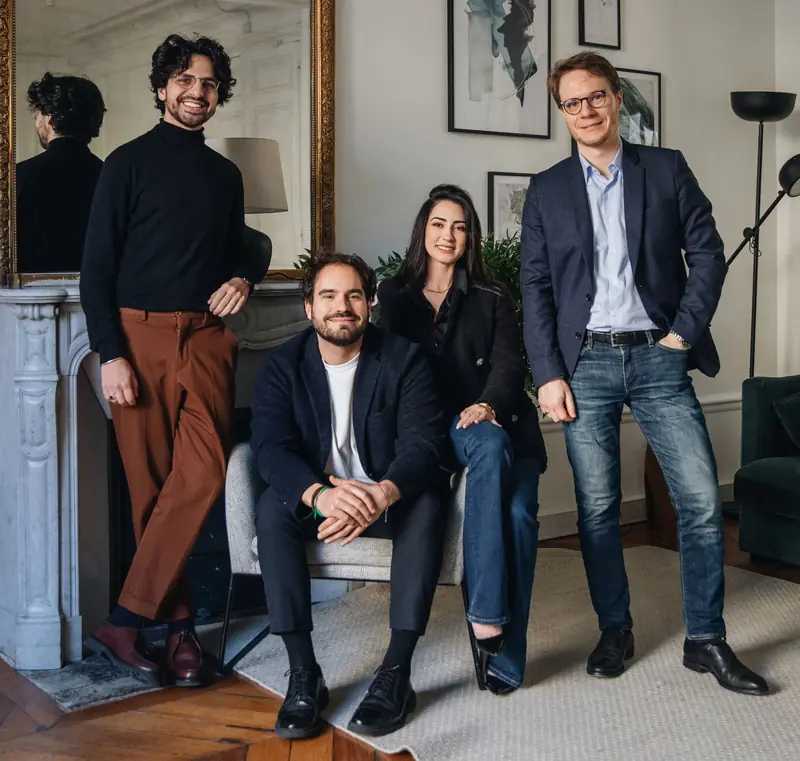
INFLUXIO is a law firm specialized in audiovisual law, based in Paris and Brussels. Film and TV production, assignment contracts, image rights, YouTube creators, distribution and CNC matters. More than 800 clients have already trusted INFLUXIO.
Response within 24 hours.




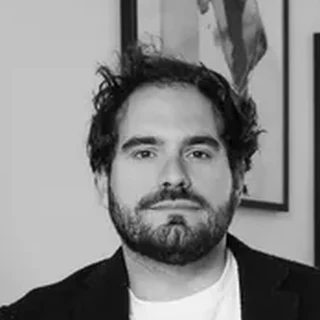
Written and reviewed by
Partner · Head of Artist
Admitted to the Paris and Brussels Bars and co-founding partner of INFLUXIO, Maître Alexandre BIGOT-JOLY trained in media law, intellectual property and criminal law. Recognised as one of the leading figures in French music law, he advises independent labels and majors, publishers, producers, managers and recording artists, and has spent more than a decade working with content creators, influencer agencies and advertisers. He lectures on music and communications law at CELSA, ISCOM and ESP.
View full profile →Updated on