
Image rights attorney
Your image belongs to you. Let's enforce it.
Paris-based law firm specialized in image rights (Article 9 of the French Civil Code), operating throughout France. Drafting and negotiating assignments, removal of infringing content, litigation in advertising law and intellectual property.




Tell us about your situation
Response within 24 hours
What is the role of an Image rights attorney ?
An image-rights lawyer acts to obtain the removal of images published without written, specific and prior consent under Article 9 of the Civil Code, brings summary proceedings and, where the images were captured in a private place without consent, prosecutes under Article 226-1 of the Criminal Code (one year and €45,000). Consult one as soon as the disputed publication appears, before it goes viral.
Our services
How we can help you.
Practical examples
Removal of personal photos used in an ad campaign without consent
An individual discovered their vacation photos used by a travel agency in an advertising campaign. Immediate removal was obtained and €20,000 in damages for image rights violation awarded.
Protection of a minor's image exploited on social media
Parents of an 8-year-old found photos of their son reposted by third-party accounts. Removal across all platforms was obtained and protection settings strengthened.
Client reviews
4.9/5 on GoogleWhat our clients say about us.
“Great responsiveness from all team members, with solutions found quickly and efficiently.”
Christ C.
“We entrusted INFLUXIO with a complex case. Their technical expertise, strategic vision and the quality of their legal briefs were decisive.”
Mia-Line C.
“We particularly appreciated the firm's professionalism, responsiveness and ability to defend our interests with conviction, while remaining measured and factual.”
Les Nouvelles A.
“I contacted this firm when launching my influencer marketing agency. Very satisfied with the quality of the work, the responsiveness and the quality of the exchanges.”
Alex E.
Let's talk about your situation,
within 24 hours.
Book a consultationInsights
Learn more about this area.
What is the right to one's image ?
The right to one's image is an autonomous right established by case law and linked to Article 9 of the French Civil Code (protection of privacy), supplemented by Articles 226-1 and 226-2 of the French Criminal Code (image capture in private settings). It allows each person to control the use of their image.
Any use of a person's image requires their specific consent, meaning consent given for a determined use, a defined medium and territory, except for exceptions provided by law. This right protects individuals' privacy and personality by regulating how their images can be used.
Attorneys specializing in image rights ensure the defense and protection of these rights, all the way to court action, from emergency interim relief to final judgment.
Exceptions to image rights.
Right to information and current events.
The right to one's image yields to the public's right to information: the distribution of images related to a current event is permitted without consent, provided the image is directly related to the event and does not violate the person's dignity. Similarly, a person photographed in a crowd at a public event, without being individualized, cannot invoke their image rights.
However, participation in a public event never constitutes general consent to the commercial exploitation of one's image: specific consent, ideally in writing, remains necessary for any determined use.
Public interest and freedom of expression.
Image distribution may be justified by public interest or freedom of expression, especially in journalism. However, images must be relevant and not violate the dignity or privacy of the person concerned. Our specialized attorneys can help determine whether a publication is justified by public interest.
Case law and practical cases.
The Court of Cassation held that image rights are an autonomous right, distinct from the right to privacy, the mere finding of an infringement of which gives rise to a right to compensation (Cass. 1st civ., 12 December 2000, No. 98-21.161). This landmark ruling confirms that the victim does not need to prove specific harm: unauthorized use is sufficient.
Image rights case law provides concrete examples of law application. Courts must often balance image rights with other rights, such as press freedom. Consulting an attorney helps understand how these decisions may affect specific situations.
Different situations of image rights violation.
Privacy violation.
Privacy violation occurs when a person's image is captured or distributed without authorization in private places or situations where the person has a legitimate expectation of privacy. This includes photos taken at home or during personal moments, without the person's consent.
Unauthorized media use.
Media must obtain prior authorization before publishing photos or videos of a person, unless justified by the public's right to information. Any publication without authorization constitutes an offense against image rights and can lead to legal proceedings. Penalties can include fines and imprisonment for the perpetrators of these violations.
Commercial use without consent.
Using images for commercial purposes, such as advertising or influencer marketing, without consent violates image rights. Image rights assignment contracts are essential to legally govern this use. Our specialized attorneys can help draft and negotiate these contracts to protect the person's interests.
Social media distribution.
Unauthorized image distribution on social media (influencers) is a common image rights violation that can harm your e-reputation. The speed at which images can spread online can cause significant reputation damage. Our attorneys can help remove images and seek compensation for damages suffered.
Special cases: public figures and public events.
Public figures have reduced image rights protection in the exercise of their functions or at public events, but their privacy remains protected. Images taken at public events may be distributed for informational purposes, provided they do not violate the dignity or privacy of those concerned.
It is always preferable to formalize authorizations for any commercial or promotional use to avoid disputes.
Why consult a specialized image rights attorney ?
Dispute prevention.
A specialized image rights attorney advises on best practices for legal image use, thus preventing potential disputes. Our firm develops strategies to secure necessary authorizations and respect image rights.
Legal assistance and representation.
In case of dispute, an image rights attorney can represent the victim to assert their rights before competent courts, including evidence preparation, complaint drafting, and judicial procedure management to obtain justice and compensation.
Image rights assignment contract negotiation and drafting.
Our specialized attorneys draft and negotiate image rights assignment contracts, clearly defining conditions of image use. These contracts are essential to protect the interests of the person concerned.
When does image use require prior consent ?
French case law derived from Article 9 of the Civil Code requires prior, specific and informed consent for any commercial or editorial use of a person's image, except in narrow public-interest exceptions (current news, public figures performing official duties, anonymised crowd shots). Consent must cover the medium, the territory, the duration and the purpose.
A model release used in fashion shoots is not transposable to a brand campaign on social media: the scope must be redrawn. Our firm drafts release templates and negotiates terms for talents, brands and agencies, including buy-out structures and renewal clauses.
Minors, deceased persons and AI-generated likenesses.
For minors, both parents must consent in writing. After death, image rights do not survive but heirs may invoke Article 9 if the use is degrading. Generative AI raises new questions: training datasets, deepfakes and synthetic doubles are addressed by the AI Act (2024/1689) and by Article 226-8 of the French Criminal Code on manipulated content.
Emergency takedown and damages.
Unauthorised publication can be enjoined through emergency proceedings (référé) before the Paris Judicial Court. Damages cover both moral prejudice and unjust enrichment. INFLUXIO secures evidence, frames cease-and-desist letters and represents clients before civil and criminal courts when the use also constitutes defamation or invasion of privacy.
Image rights litigation strategy.
The right to one's image is protected in France by Article 9 of the Civil Code (right to privacy) and by case law of the Court of Cassation, which qualifies it as a personality right (droit de la personnalité). Any reproduction or dissemination of a person's image without consent is unlawful, even when the photograph was taken in a public place, unless a specific legal exception applies (right to information, historical events, public figures in the exercise of their functions). We act in emergency référé proceedings to obtain immediate removal under Article 835 of the French Code of Civil Procedure, with sanctions up to €1,000 per day per delay.
AI-generated deepfakes and image manipulation.
The Law n° 2024-449 of 21 May 2024 (SREN Law) introduced a specific offence for non-consensual deepfakes (Article 226-8-1 Criminal Code), punishable by 2 years imprisonment and €45,000 fine, increased to 3 years and €75,000 when sexual in nature. We file criminal complaints and obtain emergency removals from platforms under DSA Articles 16 and 22.
Damages quantification.
French courts award compensation depending on the dissemination scope, commercial use and persistence: from €1,500 for a one-time press publication to €100,000+ for sustained commercial exploitation without consent.
Useful glossary in image rights.
- Article 9 of the French Civil Code
- foundation of the right to private life and image, requiring prior, specific and informed consent for any use of an identifiable person's image.
- Image-rights assignment
- contract specifying medium, duration, territory and purpose of exploitation; must be renegotiated for any use beyond the original scope.
- Référé
- emergency interim proceedings before the President of the Judicial Court enabling rapid takedown of an unauthorised publication.
Tailored support
Discuss your situation.
Receive a clear, personalized quote from our team.
FAQ
Frequently asked questions.
To prove an image rights violation, collect all available evidence of unauthorized distribution: publication copies, screenshots, and testimonies. An attorney can help gather evidence and build a solid case.
Penalties can include fines and, in serious cases, imprisonment. Fine amounts and sentence duration depend on offense severity and victim damages.
Immediately consult a specialized image rights attorney to assess the situation. They can advise on steps including cease-and-desist letters, complaint filing, and pursuing legal action for compensation.
An image rights attorney is essential for protecting individuals' image usage and privacy. They advise and represent clients when their image is used without authorization, whether in media, online, or advertising.
Image rights have several exceptions: the public's right to information (current events), public figures in the exercise of their functions, crowd images where the person is not identifiable, and public order needs. Case law balances image rights and freedom of expression on a case-by-case basis.
Image rights are personality rights that in principle expire with the person. However, heirs may act if the use of the image harms the memory of the deceased or their own privacy (Article 9 of the Civil Code). The French Court of Cassation also recognizes a right of opposition when broadcasting causes manifest distress to relatives.
Yes, under conditions. If the authorization was given gratuitously and without a fixed term, it may be revoked at any time, subject to reasonable notice and indemnification of any harm caused to the beneficiary. Conversely, an assignment for value over a defined duration and use binds the parties until its term.
Taking pictures in a public place is free, but the dissemination of an image identifying a person requires their consent (Article 9 of the Civil Code). Exceptions exist for public information on a current event, persons depicted incidentally in a crowd, or public figures in the exercise of their functions.
Related publications
Our latest publications and media appearances.
In short
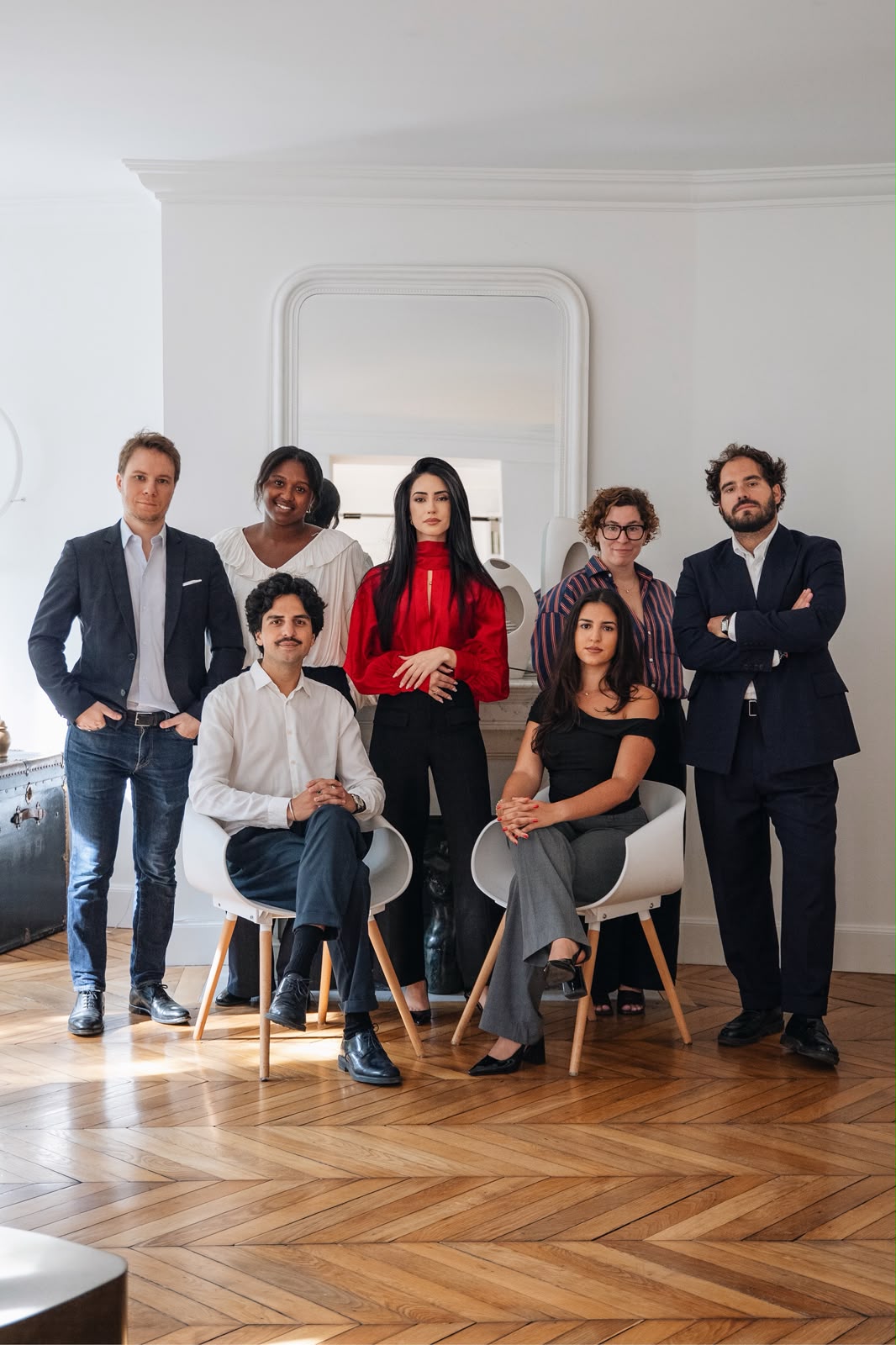
INFLUXIO is a law firm specialized in image rights, based in Paris. Authorizations, exploitation contracts, privacy violations, deepfakes, urgent removal and compensation. More than 800 clients have already trusted INFLUXIO.
Response within 24 hours.
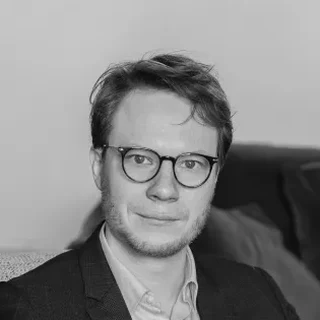
Written and reviewed by
Partner · Co-head of E-Reputation
Admitted to the Paris Bar and co-founding partner of INFLUXIO, Maître Raphaël MOLINA specialises in intellectual property, digital law and online reputation litigation. Each year he handles several hundred proceedings for content removal, delisting, fake reviews and hacked-account recovery, before civil and criminal courts. He contributed to drafting the French influencer law of June 9, 2023 and regularly speaks in the media and in professional training on digital legal issues.
View full profile →Updated on