
Music law attorney
Defending those who bring to life music.
Looking to have your music contracts drafted, reviewed, and negotiated by a professional, manage your copyrights, and create your independent label? INFLUXIO is a music law firm in Paris and Brussels, supporting artists, record labels, and distributors for years.






Tell us about your situation
Response within 24 hours
What is the role of a Music law attorney ?
A music lawyer negotiates artist, publishing, licensing and production agreements, protects copyright (Article L.111-1 IP Code) and neighbouring rights (Article L.212-1 IP Code), and handles sample, streaming, SACEM, SPPF and SCPP disputes. Consult one before signing with a label, launching a publishing house, challenging a royalty statement or bringing a music-infringement claim.
Our services
How we can help you.
Practical examples
Termination of an abusive artist contract with a label
An emerging rapper was bound by a 360° contract with a label capturing notably 90% of his revenues, and no income from his Showcases. The significant imbalance was demonstrated and judicial termination obtained, allowing the artist to recover his masters.
Infringement action for beat plagiarism
A producer discovered that one of his instrumentals had been used without authorization by a label. Infringement proceedings were initiated and €35,000 in damages obtained.
Client reviews
4.9/5 on GoogleWhat our clients say about us.
“Great responsiveness from all team members, with solutions found quickly and efficiently.”
Christ C.
“We entrusted INFLUXIO with a complex case. Their technical expertise, strategic vision and the quality of their legal briefs were decisive.”
Mia-Line C.
“We particularly appreciated the firm's professionalism, responsiveness and ability to defend our interests with conviction, while remaining measured and factual.”
Les Nouvelles A.
“I contacted this firm when launching my influencer marketing agency. Very satisfied with the quality of the work, the responsiveness and the quality of the exchanges.”
Alex E.
Let's talk about your situation,
within 24 hours.
Book a consultationInsights
Learn more about this area.
What is a music law attorney ?
Music law covers contracts with performing artists, songwriters and composers, music publishing, neighboring rights (performers, phonogram producers), collective management through SACEM, SACD, ADAMI or SPEDIDAM, and phonographic production.
Our firm secures your agreements, defends your economic and moral rights and runs the judicial proceedings whenever a dispute arises over exploitation of works.
Music law issues.
- Contract negotiation.
- Contract drafting.
- Supervised rights assignment.
- Pre-litigation and litigation.
- Work protection.
- Independent label creation.
Who is concerned ?
- Authors and composers.
- Performing artists.
- Artist agents.
- Publishers.
- Production companies.
- Music industry players.
What is concerned ?
- Copyright and neighboring rights.
- Creation protection.
- Plural works: composite and collaborative.
- Rights management.
- Judicial litigation.
- Independent and employee statuses.
What are its media ?
- Streaming platforms.
- Records.
- Concerts.
- Radio.
- Cinema, etc.
What exactly does music law encompass ?
Music law is a field full of pitfalls. Among the most common traps is signing unfavorable contracts that can place an artist in a position of dependence on a label or record company. The intervention of a specialized attorney helps avoid these imbalances and establish fairer contractual relationships. Another major issue lies in protecting the works themselves.
Plagiarism, unauthorized use, or abusive exploitation remain real risks.
Copyright.
Copyright underpins musical creation. It guarantees artists and composers recognition of their work and allows them to control the use of their songs. Filing, proof of precedence, and management of moral or economic rights are tools to secure their repertoire and prevent unlawful appropriation (counterfeiting).
Contracts and partnerships.
A musician's career is punctuated by agreements: publishing contracts, artist contracts, production contracts, management, or licensing. Each defines the parties' obligations and revenue distribution. Clear and balanced drafting is essential to preserve the artist's interests while enabling collaboration with producers, labels, or publishers.
Revenue management and neighboring rights.
Music generates diverse revenue: physical or digital sales, streaming, syncs in advertising or cinema, neighboring rights for performers and producers.
Mastering collection mechanisms, notably through collective management organizations like SACEM, SCPP, ADAMI (for performers), SPEDIDAM (for non-featured performers) and SPPF, is indispensable to guarantee fair and regular compensation for artists and rights holders.
International and digital challenges.
Globalization and new technologies are disrupting the sector. Streaming, YouTube exploitation, blockchain, NFTs: the modes of using works are multiplying. Music law must integrate these developments while also accounting for the cross-border dimension of exploitation. The rise of podcasts also constitutes an entirely new legal territory.
In what cases can we help you ?
In the music industry, every stage from creation to distribution requires appropriate legal protection. A music law attorney makes sure your rights are respected and your interests defended, in a sector where practices change fast.
Publishing and sub-publishing assignment contracts.
The music publishing contract (Article L.132-1 of the Intellectual Property Code) organizes the transfer of the author-composer's economic rights to the publisher, who commits to ensuring the permanent and continuous exploitation of the work.
Essential clauses include the assignment duration (typically 3 to 5 years, renewable), exploitation territory (France, Europe, worldwide), royalty rate (usually 50/50 between author and publisher on mechanical and synchronization rights, negotiable up to 70/30 in favor of established artists), and the publisher's obligations regarding active promotion.
Pitfalls to avoid: clauses assigning rights 'for the duration of literary and artistic property' (i.e., 70 years post mortem), overly broad exclusivity covering future works, and the absence of termination clauses for failure to exploit.
The sub-publishing contract allows the main publisher to entrust exploitation to a local publisher in a foreign territory: verify that the sub-publisher's commission (25-30% of territory revenues) does not excessively reduce the author's share.
Artistic license contract.
The artistic license contract differs fundamentally from the artist contract: the artist or their producer retains ownership of the masters.
The licensee obtains only the right to exploit the recordings for a defined period (typically 3 to 7 years) in a defined territory, in exchange for royalties calculated on the wholesale or retail price (between 15% and 25% for the artist, depending on reputation). Essential clauses include the catalog scope, exploitation perimeter (physical, digital, synchronization), potential minimum guarantees, accounting terms (semi-annual or annual), and conditions for catalog reversion upon expiry.
Classic pitfall: accepting an automatic renewal clause without sufficient notice, or a right of first refusal on future recordings that binds the artist beyond the initial contract.
Artist contract.
The artist contract is the cornerstone of the relationship between a performing artist and a phonographic producer or label. The artist assigns their neighboring rights (performer's rights under Article L.212-3 of the CPI) in exchange for proportional compensation based on sales and exploitation.
The standard royalty rate is between 8% and 15% of the wholesale price (PPD) for a debut artist, potentially reaching 18% to 25% for established artists. Duration is typically 1 to 3 firm albums, with options for additional albums.
Critical clauses to negotiate: the scope of assignment (beware of '360' contracts encompassing merchandising, touring, and sponsorship), recoupable advances and their recovery method (cross-collateralization between albums), master ownership (which goes to the producer in a standard artist contract, unlike a license deal), termination clauses for failure to exploit, and approval rights over promotion and marketing.
Artist agent contract.
The artist agent contract is governed by Articles L. 7121-9 et seq. of the French Labor Code. The agent handles the artist's placement and contract negotiation in exchange for a commission, capped at 10% of the artist's gross compensation under French regulation (Art. D. 7121-7 of the Labor Code), raised to 15% for specific career-development missions (contemporary music industry practices). Standard duration is 1 to 3 years, with territorial and sectoral exclusivity.
Essential clauses include the scope of exclusivity (recording, live, audiovisual, advertising), the agent's active obligations (minimum number of proposals, reporting), early termination conditions, and trail commissions (commission on contracts negotiated during the mandate but executed after its end, typically limited to 12-24 months). Main pitfall: a contract without specific obligation of means, leaving the artist bound without concrete results.
Recording contract.
The recording contract (or phonographic production contract) grants the producer the exclusive right to record, produce, manufacture, distribute, and promote the artist's music. Duration is typically 1 to 5 albums, with a delivery schedule setting deadlines.
The royalty rate varies between 10% and 20% of the wholesale price excluding tax, with advances recoupable from future royalties.
Essential clauses: the recording budget (at the producer's expense but often recoupable), master ownership (to the producer during the contract, with potential reversion clause), the artist's artistic approval rights over mixing and mastering, release commitment obligations with precise timelines, and termination conditions for non-exploitation.
A poorly negotiated recording contract can bind an artist for 10 to 15 years without exit possibilities.
How can our firm help you ?
Our firm specializing in music law protects and defends your rights.
Legal advice.
In a constantly evolving legal framework, our specialized attorneys help you understand applicable laws and regulations. We assist you in drafting and negotiating your contracts, as well as in assigning exploitation rights. Our experts intervene in contract law, business law, employment law, intellectual property, and music-specific regulations.
Proof of work originality.
Our team of experts helps you protect your work by proving your rights through creation and dating evidence, notably via probative filings. This guarantees effective protection of your copyrights and facilitates defending your interests in case of litigation.
Strategic advice.
Our attorneys anticipate legal issues and advise you on structuring your agreements, optimizing your copyright revenues, and managing your licenses so you can fully exploit the commercial potential of your music.
What is the role of a music attorney ?
Mediation in conflict resolution.
Our attorneys intervene as mediators to resolve conflicts, negotiating with distributors, requesting the removal of disputed content, or taking measures to protect your interests.
Knowledge of international laws.
If your activity is international, our music and intellectual property attorneys help you navigate the complex laws and regulations of other territories.
Collective management organizations.
The music industry relies on an ecosystem of collective management organizations (CMOs) responsible for collecting and distributing the rights of creators and performers.
SACEM (Society of Authors, Composers and Music Publishers) manages copyright: it collects royalties generated by public performance, streaming, radio, and synchronization, and redistributes them to member authors, composers, and publishers.
SPPF (Civil Society of Phonographic Producers in France) and SCPP (Civil Society of Phonographic Producers) represent phonographic producers, SPPF for independents, SCPP for majors, and collect neighboring rights related to the broadcast of recordings.
ADAMI, SPEDIDAM and INFLUXIO support.
ADAMI (Administration of the Rights of Artists and Musician Performers) manages the rights of principal performing artists (singers, soloists), while SPEDIDAM (Society for the Collection and Distribution of Performer Rights) represents session musicians and non-featured performers. These organizations also fund artistic projects through creation and distribution grants.
INFLUXIO supports artists and producers in their membership applications to these organizations, verifies the compliance of their declarations, negotiates membership terms where possible, and assists them in monitoring the collection of their rights. We also intervene in disputes with CMOs, whether regarding rights distribution or membership refusal.
Current challenges in music law.
Music law faces profound changes reshaping the sector's economic and legal equilibria.
Streaming, which now represents over 70% of global music industry revenues, has profoundly altered compensation models: per-stream rates (as a guide, based on market practices observed in 2025, in the range of a few thousandths of a euro per play, between approximately €0.003 and €0.008 depending on the platform) raise questions about fair artist compensation and fuel debates on 'user-centric' versus 'pro-rata' models.
Sampling practice remains legally sensitive: using a musical excerpt without authorization (clearance) constitutes counterfeiting, but European case law (CJEU, 29 July 2019, Pelham GmbH v. Ralf Hütter, Case C-476/17) nuanced the approach by introducing a recognizability threshold.
AI, stage names and music NFTs.
The emergence of AI-generated vocal deepfakes poses an unprecedented threat: reproducing an artist's voice without consent raises questions of image rights, neighboring rights, and unfair competition. The legal framework is still evolving, but the AI Act (Regulation EU 2024/1689) already imposes transparency obligations on AI-generated content.
Protecting stage names as trademarks (INPI, EUIPO filing) provides an additional layer of protection against impersonation and unauthorized commercial exploitation, a crucial issue in the social media era. Finally, music NFTs open new direct monetization possibilities (on-chain royalties, limited editions, exclusive access), but raise complex questions of copyright, legal qualification (intangible movable property? rights token?), and taxation.
INFLUXIO supports artists and labels on all these emerging challenges. Regarding artist contracts, the producer's obligation to render accounts is considered an essential obligation.
Its non-performance may justify judicial termination of the contract on the basis of Article 1224 of the Civil Code, combined with the specific obligations of the CPI (Articles L.132-13 and L.132-14 for publishing, applicable by analogy). The emergence of generative artificial intelligence in music raises unprecedented legal questions.
Tools such as Suno and Udio now allow the generation of complete musical compositions from simple text descriptions. The question of whether these creations can be protected by copyright remains open: under current French law, only a natural person can be an author.
Artists whose voice or style is reproduced by AI without authorization have remedies based on vocal image rights, neighboring rights of the performing artist, and, where applicable, economic parasitism.
The AI Act also imposes a marking obligation for any audio content generated or substantially modified by AI (art. 50 of Regulation 2024/1689), applicable from 2 August 2026 (Article 113 of the Regulation).
Useful glossary in music law.
- SACEM
- French collective management organisation for composers, lyricists and music publishers (Article L.321-1 of the IP Code).
- Neighbouring rights
- remuneration paid to performers and phonogram producers for the use of their recorded performances (Articles L.212-1 et seq. CPI).
- Synchronisation
- authorisation to embed a musical work into an audiovisual work (film, advertising, video game), negotiated separately from mechanical and public performance rights.
Tailored support
Discuss your situation.
Receive a clear, personalized quote from our team.
FAQ
Frequently asked questions.
A music law attorney is essential to protect the interests of artists and music industry professionals.
They negotiate and draft contracts (artist, publishing, licensing, production, agent), manage copyright and neighboring rights (SACEM, ADAMI, SPEDIDAM, SCPP, SPPF), handle litigation (samples, streaming, infringement) and ensure compliance with music industry regulations, in France and internationally.
The standard royalty rate in an artist contract varies depending on the artist's reputation and contract type.
For a developing artist signed to a standard artist contract, the rate is between 8% and 14% of the wholesale price excluding tax (PPD). An established artist can negotiate between 14% and 20%, while a major artist may reach 20-25%. In a license deal, where the artist retains master ownership, rates are higher: from 15% to 30%. Watch out for advance recoupment mechanisms that delay actual royalty payments.
Yes, several legal grounds allow this. Termination for non-performance (Article 1224 of the French Civil Code) applies if the producer fails to meet essential obligations: failure to exploit, non-payment of royalties, absence of accounting statements. Termination for unfair terms can be invoked if the contract creates a significant imbalance.
Additionally, some contracts include exit clauses (key-man clause, minimum release commitment). A specialized attorney evaluates the available grounds and negotiates an amicable exit before initiating court proceedings.
A 360 deal (or comprehensive contract) is an agreement whereby the label or producer receives a commission on all of the artist's revenue sources: phonographic recordings, concerts and tours, merchandising, sponsorship, image rights, and sometimes digital activities (YouTube, social media). This type of contract developed as physical sales revenue declined.
Commissions vary by stream: 15-20% on live, 20-30% on merchandising, 10-15% on sponsorship. The risk for the artist is losing control of ancillary revenues without sufficient counterpart in terms of label investment.
There is no legal obligation to register with SACEM before signing a publishing contract, but it is strongly recommended. SACEM membership enables the collection and distribution of public performance and mechanical reproduction rights. Without membership, the author-composer would have to manage their own rights collection, which is practically impossible.
In practice, most publishers require prior SACEM membership. However, membership involves contributing works to SACEM, which then manages rights exclusively.
Creating a music label involves several legal steps: choosing the legal form (SAS recommended for flexibility, SARL for smaller structures), registration with NAF code 5920Z (sound recording and music publishing), filing the label's trademark with INPI, joining a collective management organization (SPPF for independents), obtaining an ISRC code for recording identification, and drafting standard contracts (artist, license, distribution). A specialized attorney secures each step and helps structure your activity from the start.
A license contract grants the licensee the right to exploit recordings (manufacturing, promotion, sales) in a defined territory for a set period, in exchange for royalties and potentially a minimum guarantee. The licensee bears marketing and distribution costs.
A distribution contract is more limited: the distributor handles only logistics (physical or digital placement, delivery to platforms) in exchange for a commission (15-25% of wholesale price). The artist or producer retains control of marketing and promotion.
To legally use a sample, you must obtain dual authorization (clearance): from the holder of rights in the musical work (author-composer or publisher, via SACEM) and from the holder of rights in the recording (phonographic producer). Negotiation covers compensation (flat fee or royalty percentage), credit, and exploitation territory.
Without authorization, use constitutes counterfeiting (Article L.335-3 of the CPI). The Pelham ruling (CJEU, 29 July 2019, Case C-476/17) confirmed that even a very short extract requires clearance if the extract is recognizable.
The recovery of original recordings (masters) depends on the stipulations of the artist or license agreement. In the absence of a reversion clause, the artist must negotiate an amicable retrocession or invoke a breach by the producer of their obligations (failure to exploit, absence of account rendering) to obtain judicial termination of the contract.
The music publisher manages the rights to the musical work (the composition and lyrics), while the phonographic producer holds the rights to the sound recording (the master). The publisher receives royalties generated by broadcasting, mechanical reproduction, and synchronization of the work. The producer receives those related to the exploitation of the recording.
An artist management contract entrusts a manager with managing the artist's career in exchange for a commission (generally between 15% and 25% of gross revenues). The main risks for the artist lie in the scope of exclusivity, the duration of commitment, the perimeter of commissionable revenues, and the exit conditions.
Both. Streaming generates both copyright (for authors-composers and publishers, collected by SACEM) and neighboring rights (for performing artists and phonographic producers, collected respectively by ADAMI/SPEDIDAM and SCPP/SPPF). Streaming platforms pay royalties to collective management societies and distributors/labels, who then distribute them according to existing contracts.
Per-stream compensation is very low (approximately €0.003 to €0.008 depending on the platform), making stream volume and proper contractual revenue distribution crucial.
Related publications
Our latest publications and media appearances.

In short
INFLUXIO is a law firm specialized in music law, based in Paris and Brussels. Artist contracts, publishing, phonographic production, neighboring rights (SACEM/SPPF/ADAMI), music industry litigation. More than 800 clients have already trusted INFLUXIO.
Response within 24 hours.



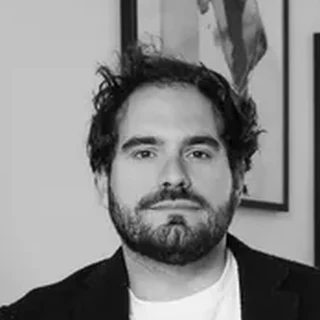
Written and reviewed by
Partner · Head of Artist
Admitted to the Paris and Brussels Bars and co-founding partner of INFLUXIO, Maître Alexandre BIGOT-JOLY trained in media law, intellectual property and criminal law. Recognised as one of the leading figures in French music law, he advises independent labels and majors, publishers, producers, managers and recording artists, and has spent more than a decade working with content creators, influencer agencies and advertisers. He lectures on music and communications law at CELSA, ISCOM and ESP.
View full profile →Updated on