
Web3 lawyers
Secure your blockchain project, with no missteps.
Web3 law firm in Paris and Brussels. MiCA and CASP compliance, NFT, DAO and smart contract structuring, crypto taxation, Web3 gaming, metaverse, stablecoin and DeFi litigation.





Tell us about your situation
Response within 24 hours
What is the role of a Web3 lawyer ?
A Web3 lawyer prepares the CASP authorisation under the MiCA Regulation ((EU) 2023/1114, applicable since 30 December 2024), drafts NFT contracts and DAO bylaws and defends before the AMF and the DGCCRF (advertising, Article L.222-16-1 Consumer Code). Consult one before any token launch or custody-service rollout.
Our services
How we can help you.
Practical examples
PSAN transition to CASP status
A digital asset service provider registered with the AMF under the PACTE regime was supported in preparing its CASP authorisation file: governance, own funds, client asset segregation, DORA cybersecurity, AML-CFT plan and RTS under article 62(5) MiCA. The authorisation was obtained before the 1 July 2026 deadline, with European passport for all 27 Member States.
NFT project qualification and token requalification
A publisher planned to issue an NFT collection embedding financial rights. A qualification memo under article 2(3) MiCA and MiFID II revealed a requalification risk as a financial instrument. The token and white paper were redesigned to remain within the utility token perimeter, avoiding a heavy AMF authorisation.
Client reviews
4.9/5 on GoogleWhat our clients say about us.
“Great responsiveness from all team members, with solutions found quickly and efficiently.”
Christ C.
“We entrusted INFLUXIO with a complex case. Their technical expertise, strategic vision and the quality of their legal briefs were decisive.”
Mia-Line C.
“We particularly appreciated the firm's professionalism, responsiveness and ability to defend our interests with conviction, while remaining measured and factual.”
Les Nouvelles A.
“I contacted this firm when launching my influencer marketing agency. Very satisfied with the quality of the work, the responsiveness and the quality of the exchanges.”
Alex E.
Let's talk about your situation,
within 24 hours.
Book a consultationInsights
Learn more about this area.
What is a Web3 lawyer ?
Web3 covers services and applications built on distributed ledgers (public or consortium blockchains) and on native assets (fungible tokens, non-fungible tokens, utility tokens, e-money tokens and asset-referenced tokens). The applicable legal environment is no longer experimental: it is dense, polycentric and fully binding since 30 December 2024, the date on which all provisions of Regulation (EU) 2023/1114 (MiCA) became applicable.
The Web3 lawyer combines financial law (MiCA, MiFID II, MAR), contract law, intellectual property, consumer law, GDPR, digital criminal law, taxation of digital assets and AML-CFT obligations with technical understanding of blockchain architectures, smart contracts, DeFi protocols and token standards, all the way to technology litigation before civil and commercial courts.
- ✓Choice of structure: French association, SAS, foundation, regulated offshore vehicle
- ✓CASP authorisation application before the AMF, in coordination with the ACPR for prudential aspects
- ✓Contractual and IP protection of NFT collections, marketplaces and licensing agreements
- ✓Framing of reward programmes and utility tokens (airdrops, staking, rewards)
- ✓Representation before the AMF, ACPR, DGCCRF, CNIL, ANJ and criminal courts
Main areas covered by a Web3 lawyer.
Our scope ranges from token issuance (white paper drafting, token qualification, notification or authorisation) to post-litigation disputes (token theft, scams, smart contract hacks, challenges to AMF decisions). We also cover account opening with credit institutions, drafting token agreements, fundraising through token issuance, and taxation of founders and investors.
Recognised Web3 expertise.
The firm advises PSANs transitioning to CASP status, Web3 game studios, NFT artists, DAO foundations and crypto asset managers. This practice, fed by constant monitoring of ESMA, EBA, AMF, ACPR and TRACFIN positions, delivers operational solutions defensible before regulators.
- ✓CASP authorisation pathway, RTS-compliant file (article 62(5) MiCA), business continuity plan, DORA cyber-resilience (Regulation (EU) 2022/2554)
- ✓Compliance audit of a DeFi protocol, mapping of CASP requalification risks, analysis of effective decentralisation
- ✓Drafting of legally enforceable smart contracts and their natural-language counterparts
- ✓Advice on the boundary between crypto-asset (MiCA) and financial instrument (MiFID II, article 4(2))
Tailored approach.
Every Web3 project has its own architecture, tokenomics and risk exposure. We adapt our support to project maturity: prototyping, fundraising, launch, scale-up, exit or litigation.
- ✓48-hour flash audit to qualify a token and identify required authorisations
- ✓Qualification memo under article 2(4) MiCA and DeFi exclusions
- ✓Costed action plan for PSAN to CASP transition before 1 July 2026
- ✓Recurring monthly counsel arrangement for founders
Specialised team.
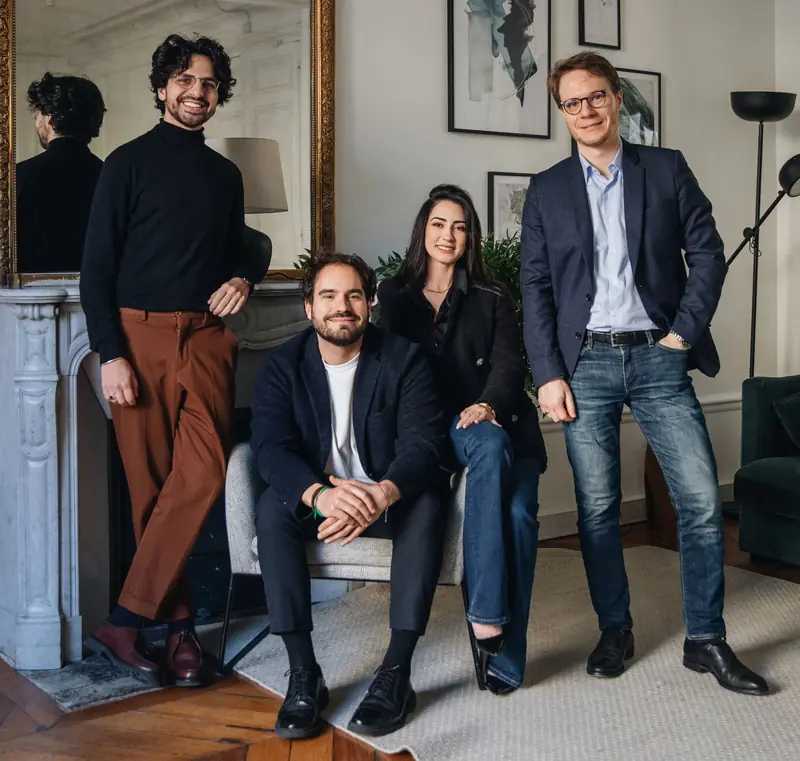
Maître Maria Berrada, partner and legal counsel of the French Video Game Federation, regularly handles blockchain projects and Web3 games. She is supported by Maître Raphaël Molina on NFT intellectual property and business law, and by Maître Alexandre Bigot-Joly on criminal aspects (fraud, breach of trust, money laundering, crypto market manipulation).
Web3 commercial contracts.
The Web3 ecosystem multiplies contract types: token sale agreements (SAFT), minting service agreements, NFT marketplace contracts, tokenised work licence agreements, staking agreements, DAO governance contracts, validation contracts. We draft and negotiate these contracts integrating MiCA, GDPR, DSA and intellectual property constraints.
Stablecoins, ART and EMT.
MiCA distinguishes asset-referenced tokens (ART, articles 16 et seq.) from e-money tokens (EMT, articles 48 et seq.), applicable since 30 June 2024. EMT issuance is reserved to authorised credit institutions and electronic money institutions. ART issuance requires a specific authorisation and white paper approval, with reinforced requirements for significant tokens supervised by the EBA.
GDPR compliance and Web3.
Indefinite storage of data on a public blockchain conflicts with the right to erasure (article 17 GDPR) and storage limitation (article 5). We design compliant architectures: off-chain personal data storage, on-chain hashes only, key encryption, DPIA procedures, in line with CNIL and EDPB recommendations.
Web3 dispute management.
Web3 disputes are multifaceted: challenge to AMF deregistration decisions, NFT counterfeiting actions, liability claims against DAO founders, criminal proceedings after hacks or rug pulls, recovery of frozen assets. The firm handles both amicable and contentious phases before civil, administrative, criminal and commercial courts in France and Belgium.
MiCA scope and timeline.
Regulation (EU) 2023/1114 of 31 May 2023 entered into force on 29 June 2023; ART and EMT provisions apply since 30 June 2024 and CASP provisions since 30 December 2024. A grandfather clause (article 143 MiCA) allows French PSANs registered or authorised before 30 December 2024 to continue activities until 1 July 2026 at the latest.
After that date, any provider operating without CASP authorisation faces withdrawal of operating rights and the sanctions of the French Monetary and Financial Code. CASP authorisation is granted by the AMF, in coordination with the ACPR for prudential and AML aspects, based on a file specified by the RTS adopted under article 62(5) MiCA. Requirements include governance, financial soundness (minimum own funds of EUR 50,000 to 150,000 depending on services), client asset segregation, cybersecurity, conflict-of-interest management and complaint handling.
PSAN, CASP and EU passport.
French Ordinance no. 2024-936 of 15 October 2024 transposed MiCA into the French Monetary and Financial Code, opened a simplified authorisation procedure for PSANs benefiting from reinforced registration or optional authorisation under the PACTE Act, and organised the phase-out of the national PSAN regime by 1 July 2026. The CASP authorisation granted by the AMF carries a European passport allowing services to be provided in all 27 Member States after notification to the host authority.
Travel Rule and AML-CFT.
Regulation (EU) 2023/1113 (Travel Rule), applicable since 30 December 2024, requires CASPs to collect and transmit identification details of the originator and beneficiary for any crypto-asset transfer, with no minimum threshold.
CASPs are also fully subject to AML-CFT vigilance obligations: customer identification, transaction monitoring, five-year record keeping, suspicious transaction reports to TRACFIN, asset freezing.
NFT qualification and copyright.
An NFT is not, in itself, a work of the mind. It is a digital authenticity certificate that may point to a copyright-protected work. Transfer of an NFT does not, absent express stipulation, transfer the author's economic rights, by application of article L.111-3 of the French Intellectual Property Code and the writing requirement of articles L.131-2 and L.131-3.
DAO, legal qualification and liability.
Under French law, a DAO has no legal personality. Without formal structuring, it risks requalification as a de facto company (articles 1832 and 1873 of the Civil Code), with unlimited joint liability of members for company debts where the activity is commercial.
The Haut Comité Juridique de la Place Financière de Paris recommends hybrid structures combining SAS and association, or jurisdictions with specific DAO regimes (Wyoming, Marshall Islands).
Smart contracts and legal value.
A smart contract is not, in itself, a contract within the meaning of the French Civil Code. It is its automated execution, where the conditions of validity (article 1128: consent, capacity, lawful and certain content) are met. Electronic form is admitted by articles 1125 and 1127-1 of the Civil Code; the evidentiary force of electronic writing results from article 1366. We draft the natural-language mirror agreements that must accompany any smart contract on which substantial rights rest.
Web3 gaming, JONUM and the gambling boundary.
French law no. 2024-449 of 21 May 2024 (SREN) created, in its article 40, a three-year experimental regime for monetisable digital object games (JONUM). Implementing decree no. 2026-60 of 4 February 2026 sets six authorised game categories, excludes casino mechanics, caps accessory rewards, prohibits minor access and imposes AML-CFT obligations.
Stepping outside this framework exposes the publisher to requalification as illegal gambling under article L.320-1 of the French Internal Security Code, criminally sanctioned.
Taxation of digital assets.
Article 150 VH bis of the French General Tax Code subjects capital gains on disposals of digital assets by individuals to a 30 % flat tax (12.8 % income tax and 17.2 % social contributions), with an annual exemption threshold of EUR 305 and neutrality of crypto-to-crypto exchanges without cash payment.
Habitual buy-sell activity falls under industrial and commercial profits (BIC), mining under non-commercial profits (BNC). NFTs may be integrated into the portfolio under article 150 VH bis or taxed separately as artwork (article 150 VI, 6.5 % flat tax).
DAC8 and reporting obligations.
Directive (EU) 2023/2226 of 17 October 2023 (DAC8) was to be transposed by 31 December 2025. Its collection and reporting obligations apply to transactions carried out from 1 January 2026, with first reporting between January and September 2027. Any CASP serving European residents, including from outside the EU, is concerned.
Sanctions, set by each Member State, must be dissuasive and may reach several hundred thousand euros per defaulting entity.
Metaverse and intellectual property.
The metaverse has no specific legal framework. For trademarks, the speciality principle requires holders to consider specific filings in classes 9, 35, 41 and 42 to cover virtual goods and services.
The Hermès v. MetaBirkins case, decided in the United States in 2023, and several European decisions confirm that a trademark used in the physical world may be infringed by an unauthorised NFT version. Image rights and the GDPR also apply to avatars, biometric scans and immersive interactions.
DSA, Web3 platforms and NFT marketplaces.
Regulation (EU) 2022/2065 (DSA), fully applicable since 17 February 2024, applies to NFT marketplaces and Web3 platforms that qualify as hosting services or online platforms.
Obligations include notice-and-action mechanisms (article 16), traceability of professional sellers (KYBC, article 30), transparent terms of use (article 14), transparency reports (article 15) and, for very large platforms, annual systemic risk assessments. Fines may reach 6 % of global turnover.
Structuring support.
The choice of structure determines the tax regime, the founders' liability, the ability to enter into contracts and the capacity to raise funds.
In the absence of a specific French framework for DAOs, several hybrid schemes can be considered, for instance combining an operating SAS with a loi 1901 association holding the protocol, in line with the avenues opened by the report of the Haut Comité Juridique de la Place Financière de Paris.
Intellectual property and NFTs.
An NFT is not, in itself, a work of the mind.
It is a digital certificate of authenticity, which may point to a work protected by copyright (Article L.111-1 of the French Intellectual Property Code). Transferring an NFT does not, absent express stipulation, transfer the author's economic rights, pursuant to the principle of Article L.111-3 of the same code and the written-form requirement of Articles L.131-2 and L.131-3. The firm secures this articulation for artists, brands and marketplaces.
Useful Web3 glossary.
- MiCA
- Regulation (EU) 2023/1114 of 31 May 2023 on markets in crypto-assets, fully applicable since 30 December 2024, creating a unified European framework for issuers and crypto-asset service providers (CASPs).
- CASP
- Crypto-Asset Service Provider, authorised under MiCA article 3(15). Status granted by the AMF in France, carrying a European passport, progressively replacing the PSAN status of the PACTE Act until 1 July 2026.
- ART and EMT
- Asset-Referenced Tokens (articles 16 et seq. MiCA) and E-Money Tokens (articles 48 et seq. MiCA), the two stablecoin categories framed by MiCA since 30 June 2024.
- Travel Rule
- Regulation (EU) 2023/1113 of 31 May 2023 requiring CASPs to transmit, without threshold, identification information on the originator and beneficiary of any crypto-asset transfer.
- DAC8
- Directive (EU) 2023/2226 of 17 October 2023 introducing automatic exchange of tax information on crypto-asset transactions, applicable from 1 January 2026, first reporting in 2027.
- DAO
- Decentralized Autonomous Organization, governed by smart contracts and token holder votes, with no legal personality under French law and exposed by default to requalification as a de facto company.
Tailored support
Discuss your situation.
Receive a clear, personalized quote from our team.
FAQ
Frequently asked questions.
A Web3 lawyer secures blockchain, NFT and crypto-asset projects under MiCA and the French PSAN registration with the AMF, audits smart contracts and whitepapers, and handles disputes over copyright and intellectual property on digital assets.
No. There is no automatic transition. The PSAN must file a CASP authorisation application with the AMF. PSANs benefiting from reinforced registration or optional authorisation under the PACTE Act may use a simplified procedure. Others must follow the full procedure of MiCA article 62. Without authorisation by 1 July 2026, providing crypto-asset services in France becomes illegal.
In principle, no. MiCA article 2(3) excludes unique and non-fungible crypto-assets. This exclusion does not however apply to NFTs issued in large series, fractionalised or representing financial rights, which may be requalified as utility tokens, ART or even financial instruments under MiFID II.
Not in its own name, having no legal personality. The DAO must rely on a recognised legal structure (SAS, association, foundation, ad hoc foreign vehicle). Otherwise, signing members engage their personal liability and the DAO may be requalified as a de facto company with unlimited joint liability for company debts.
Article 150 VH bis of the French General Tax Code applies a 30 % flat tax on annual net capital gains, with an exemption below EUR 305 of disposals per year, neutrality of crypto-to-crypto exchanges without cash payment, and the option to elect for the progressive scale since 2023 income.
Depending on the case: illegal exercise of a regulated profession (article L.572-23 of the French Monetary and Financial Code), fraud (article 313-1 of the Criminal Code), breach of trust, money laundering (article 324-1), illegal investment service, or illegal gambling offences (articles L.324-1 et seq. of the Internal Security Code) where paid random mechanics are used.
Yes, where it constitutes a hosting service or online platform connecting users. The marketplace is subject to DSA articles 14, 15, 16 and 30 (clear terms, notice-and-action mechanisms, KYBC), and to reinforced obligations if designated VLOP by the European Commission.
Yes, with adapted architecture. Personal data must not be stored on-chain: only cryptographic hashes are, with actual data kept off-chain and revocable. A DPIA is generally mandatory for large-scale blockchain projects under article 35 GDPR.
Article L. 572-23 of the French Monetary and Financial Code (wording resulting from Ordinance No. 2024-936 applicable on 1 July 2026) punishes failure to inform the AMF with one year's imprisonment and a €15,000 fine, and breach of the prohibitions set out in Article L. 54-10-4 with two years' imprisonment and a €30,000 fine.
To these penalties may be added closure of the activity, account freezing and the administrative sanctions imposed by the AMF, as well as, where the constitutive elements are met, the criminal qualification of fraud (Article 313-1 of the Criminal Code: 5 years and €375,000).
Related publications
Our latest publications and media appearances.
In short
INFLUXIO is a law firm specialized in web3, based in Paris. CASP authorisation, PSAN transition, Travel Rule compliance, NFT, DAO, smart contracts, crypto taxation, JONUM and AMF defence. More than 800 clients have already trusted INFLUXIO.
Response within 24 hours.





Written and reviewed by
Partner · Head of Digital Law
Admitted to the Paris Bar and co-founding partner of INFLUXIO, Maître Maria BERRADA combines intellectual property and technology law. A CNIL-registered DPO, she advises AI model providers, deeptech startups, large corporates and institutions on GDPR and AI Act compliance, trademark and design law, and Web3. She previously headed the Intellectual Property and Innovative Industries department of a leading specialist firm and teaches at EFAP.
View full profile →Updated on