
Artist contract lawyer
Every note deserves a contract to match.
INFLUXIO supports artists, labels, producers and publishers in drafting, negotiating and securing their music contracts. Artist agreements, publishing contracts, license deals, management contracts: our expertise in music law protects your interests at every stage of your career.





Tell us about your situation
Response within 24 hours
What is the role of an Artist contract lawyer ?
An artist-contract lawyer drafts and negotiates exclusive recording, publishing, licensing and 360 deals, applies the separate written assignment per mode of exploitation (Article L.212-3 IP Code) and proportional remuneration. Consult one before signing with any label or producer, including for a first development deal.
Our services
How we can help you.
Practical examples
Termination of an abusive 360° contract for an emerging rapper
An artist was bound by a 360° contract capturing 90% of revenue over 8 years. The significant imbalance was demonstrated, resulting in judicial termination and master recovery.
Negotiation of a publishing deal with a major for a songwriter
A songwriter received a major's publishing offer. Renegotiation achieved a 60/40 split instead of 50/50, a 3-year reversion clause and guaranteed minimum exploitation.
Client reviews
4.9/5 on GoogleWhat our clients say about us.
“Great responsiveness from all team members, with solutions found quickly and efficiently.”
Christ C.
“We entrusted INFLUXIO with a complex case. Their technical expertise, strategic vision and the quality of their legal briefs were decisive.”
Mia-Line C.
“We particularly appreciated the firm's professionalism, responsiveness and ability to defend our interests with conviction, while remaining measured and factual.”
Les Nouvelles A.
“I contacted this firm when launching my influencer marketing agency. Very satisfied with the quality of the work, the responsiveness and the quality of the exchanges.”
Alex E.
Let's talk about your situation,
within 24 hours.
Book a consultationInsights
Learn more about this area.
Why hire a lawyer for your music contracts ?
The music industry is built on a dense network of contractual relationships between artists, labels, producers, publishers and distributors. Each contract determines the allocation of rights, revenues and responsibilities for years, sometimes decades. A poorly negotiated contract can stall an artist's career, while a well-structured agreement becomes a genuine growth lever.
INFLUXIO, a law firm specializing in music law, intervenes to rebalance power dynamics, secure each party's interests and run judicial proceedings in any contractual dispute.
The artist agreement (exclusive recording contract).
The artist agreement, also known as the exclusive recording contract, is the foundational contract of the music industry. It binds a performing artist to a phonographic producer (label) for the production of sound recordings.
Definition and stakes.
The artist agreement is a contract whereby a performing artist exclusively commits to a phonographic producer to create sound recordings. The producer covers recording, manufacturing and promotion costs in exchange for exploitation rights over the phonograms.
Article L.7121-3 of the French Labor Code establishes a presumption of employment for performing artists: the performer is presumed to be an employee as soon as they perform a service for compensation, unless evidence of fully independent practice is established. This characterization has major consequences on social charges, social protection and legal subordination.
Essential clauses.
A well-drafted artist agreement must include precise clauses on:
- Contract duration and number of albums (renewal options)
- Territory of exploitation (France, Europe, worldwide)
- Recoverable and non-recoverable advances
- Royalty rate and calculation basis
- Costs recoverable by the label (recording, promotion, music videos)
- Label's promotion obligations (guaranteed minimum)
- Rights reversion clause in case of insufficient exploitation
Compensation: royalties and advances.
Artist compensation typically consists of an advance (sum paid upon signing, recoverable from future royalties) and proportional royalties on sales and streams. Royalty rates vary considerably: from 8% to 25% of the wholesale price depending on bargaining power. For streaming, compensation is calculated on the net revenue received by the label after deducting the platform's commission.
INFLUXIO negotiates the most favorable terms for its clients.
Duration and options.
The duration of an artist agreement is generally expressed as a number of albums (1 firm album + 2 to 4 option albums). Each option must be exercised by the label within a specified timeframe, failing which the contract ends. The total duration should not be excessive: contracts exceeding 7-8 years may be considered abusive.
The artist must ensure that option exercise conditions are not purely discretionary for the label.
The music publishing agreement.
The music publishing agreement binds a songwriter-composer to a music publisher. The publisher commits to ensuring the publication, exploitation and promotion of the works in exchange for a copyright assignment.
Copyright assignment.
The publishing agreement transfers the author's economic rights to the publisher. This assignment must comply with the French Intellectual Property Code (Article L.131-3): each assigned right must be separately mentioned, and the scope of exploitation must be defined. The publisher acquires the right to exploit the works in all forms (reproduction, performance, synchronization, adaptation).
Revenue sharing.
Revenues from copyright (SACEM) are shared between the songwriter-composer and the publisher according to the terms defined by the contract and SACEM rules. The standard split is 50/50 on mechanical rights and a variable share on performance rights. INFLUXIO ensures the split is fair and in line with market practices.
Publisher's obligations.
The publisher has active obligations toward the author: ensure permanent and continuous exploitation of the works, seek synchronization placements (audiovisual, advertising), provide detailed semi-annual accounts, and pay royalties within agreed deadlines. Failure to meet these obligations may justify contract termination.
License and distribution agreements.
A license agreement allows a label or independent artist to entrust the commercial exploitation of their recordings to a distributor, without transferring ownership of the masters.
Exclusive vs non-exclusive license.
An exclusive license grants the distributor a monopoly on exploitation within a defined territory and timeframe. A non-exclusive license allows the licensee to exploit the recordings without exclusivity, leaving the producer free to enter other agreements.
Physical and digital distribution.
The distribution agreement must distinguish between physical distribution (pressing, logistics, retail placement) and digital distribution (aggregation to streaming and download platforms). Margins and conditions differ considerably between these two channels.
Streaming and platforms.
With the rise of streaming (Spotify, Apple Music, Deezer), digital distribution contracts are increasingly important. The contract must specify the target platforms, revenue reporting conditions, streaming data transparency, and catalog withdrawal terms.
Production and co-production agreements.
The music production contract governs the relationship between an artist and a producer for the creation of a specific recording (single, EP, album). In co-production, two or more producers share costs and exploitation rights.
The contract must precisely define the allocation of investments, rights and revenues between co-producers, as well as decision-making procedures (unanimity or majority) and exit conditions.
Artist management agreements.
The manager holds a decisive position in an artist's career. The management contract must be carefully drafted to prevent abuse.
Role of the manager.
The manager advises the artist on their career, negotiates on their behalf, coordinates the various stakeholders (label, publisher, tour promoter, booking agent) and contributes to developing the artist's image.
Agency contract vs employment contract.
The management contract is typically an agency agreement (the manager acts in the name and on behalf of the artist). It must not be reclassified as an employment contract, which requires the absence of a subordination link.
Commission and duration.
The manager's commission generally ranges from 15% to 25% of the artist's gross revenue. The contract must specify the calculation basis, mandate duration (2 to 5 years, renewable), and post-contractual commissions (sunset clause).
The 360-degree contract.
The 360° contract is a contractual model whereby the label or producer shares in all of the artist's revenue streams: recording, publishing, live, merchandising, image, sponsorship.
Principle and operation.
Unlike the traditional artist agreement (limited to recording), the 360° contract gives the label a share of all the artist's revenue sources. In return, the label commits to investing more heavily in the overall development of the artist's career.
Benefits and risks for the artist.
A 360° contract can benefit an early-career artist who receives massive label investment. But it carries major risks: loss of career control, overall lower compensation, difficulty exiting the contract. INFLUXIO analyzes each 360° proposal to identify abusive clauses.
Negotiating your contract: key watchpoints.
Negotiating a music contract is a strategic exercise requiring deep knowledge of industry practices.
Clauses to watch.
Certain clauses deserve particular attention:
- Cross-collateralization clause (offsetting advances between albums)
- Packaging deduction clause (packaging discount, obsolete in streaming)
- 'Controlled composition' clause (reduction of publishing royalties)
- Minimum sales clause for contract maintenance
- Artistic oversight clause
- Post-contractual non-compete clause
Performing artist's rights.
The performing artist has their own rights, distinct from copyright, protected by Articles L.212-1 et seq. of the French Intellectual Property Code. These neighboring rights include the right to authorize or prohibit the reproduction and communication of their performances. They are collectively managed by ADAMI and SPEDIDAM.
Early contract termination.
Early termination of a music contract may occur in case of serious breach of obligations by one party, by amicable agreement, or through judicial proceedings for significant imbalance (Article 1171 of the French Civil Code for adhesion contracts) or for non-performance (Article 1224 of the French Civil Code). Where the relationship qualifies as a commercial partnership, Article L.442-1 of the French Commercial Code may also be invoked.
INFLUXIO supports you in contract termination to preserve your rights.
Useful glossary in music contracts.
- Artist agreement (exclusive recording contract)
- contract by which a performing artist exclusively commits to a phonographic producer to make sound recordings in exchange for advances and royalties.
- Music publishing contract
- contract by which a songwriter-composer assigns to a publisher their patrimonial rights (Article L.131-3 of the French Intellectual Property Code) over a work, in exchange for an obligation of permanent and ongoing exploitation.
- Reversion clause
- clause allowing the artist to recover ownership of their masters at the end of a defined period or in case of insufficient exploitation by the producer.
Tailored support
Discuss your situation.
Receive a clear, personalized quote from our team.
FAQ
Frequently asked questions.
Rates generally range from 8% to 14% for a developing artist, 14% to 20% for an established artist, and up to 20-25% for a major artist. These rates apply to the wholesale price (PPD) or net streaming revenue.
Early termination is possible under certain conditions: serious breach by the label (failure to exploit, accounts not rendered, late payment), negotiated amicable termination, or judicial termination for significant imbalance.
An artist agreement binds a performing artist to a phonographic producer for sound recordings (neighboring rights). A publishing contract binds a songwriter-composer to a music publisher for the exploitation of compositions (SACEM copyright).
There is no legal obligation to do so. An artist may self-publish and self-distribute. Signing with a label generally implies assignment of rights over recordings, but the scope is negotiable.
For review and negotiation: €1,500-5,000 excl. VAT. For complete drafting: €3,000-8,000 excl. VAT. INFLUXIO offers adapted packages.
A 360° contract is a comprehensive agreement whereby the label receives a commission on all the artist's revenue: sales, publishing, concerts, merchandising, sponsoring. It must be negotiated with caution.
The artist can recover their masters if a reversion clause is included. Without such a clause, rights remain with the producer for 70 years. Negotiating reversion is crucial at signing.
Registration is not a mandatory prerequisite, but it is strongly recommended. SACEM membership implies entrusting your works to collective management.
Related publications
Our latest publications and media appearances.

In short
INFLUXIO is a law firm specialized in artist contract, based in Paris. Drafting, negotiation, termination. Labels, producers, publishers, artists. More than 800 clients have already trusted INFLUXIO.
Response within 24 hours.



Written and reviewed by
Partner · Head of Artist
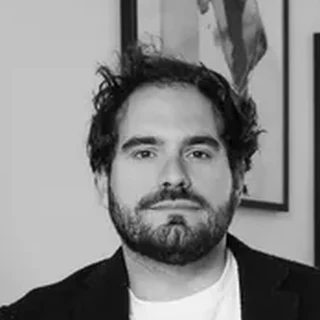
Admitted to the Paris and Brussels Bars and co-founding partner of INFLUXIO, Maître Alexandre BIGOT-JOLY trained in media law, intellectual property and criminal law. Recognised as one of the leading figures in French music law, he advises independent labels and majors, publishers, producers, managers and recording artists, and has spent more than a decade working with content creators, influencer agencies and advertisers. He lectures on music and communications law at CELSA, ISCOM and ESP.
View full profile →Updated on